In Situ Machines
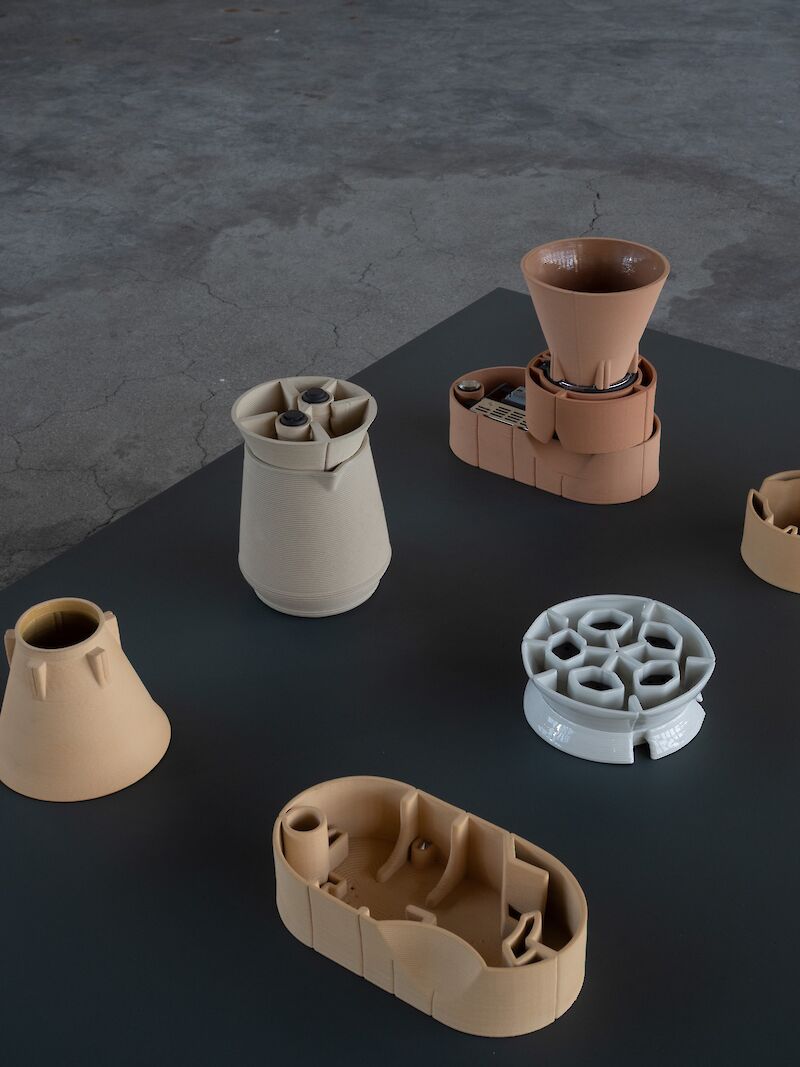
Disestablishing the Assembly Line of Appliances
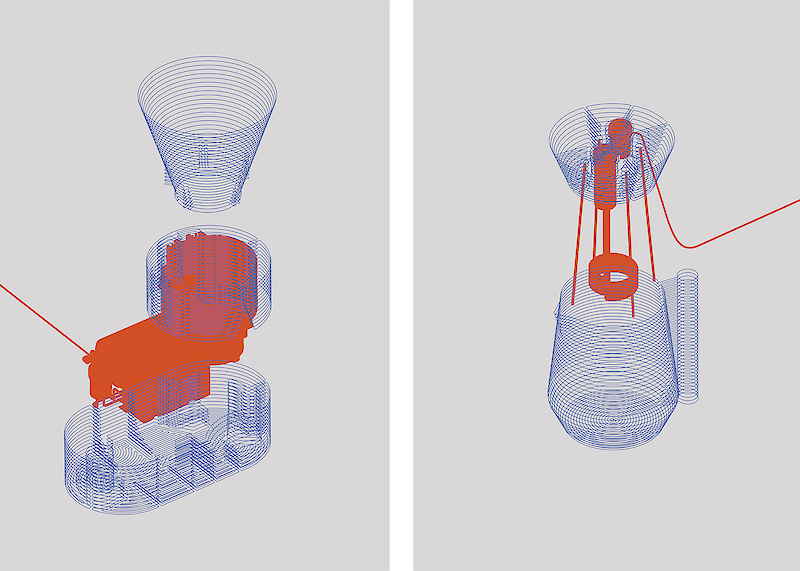
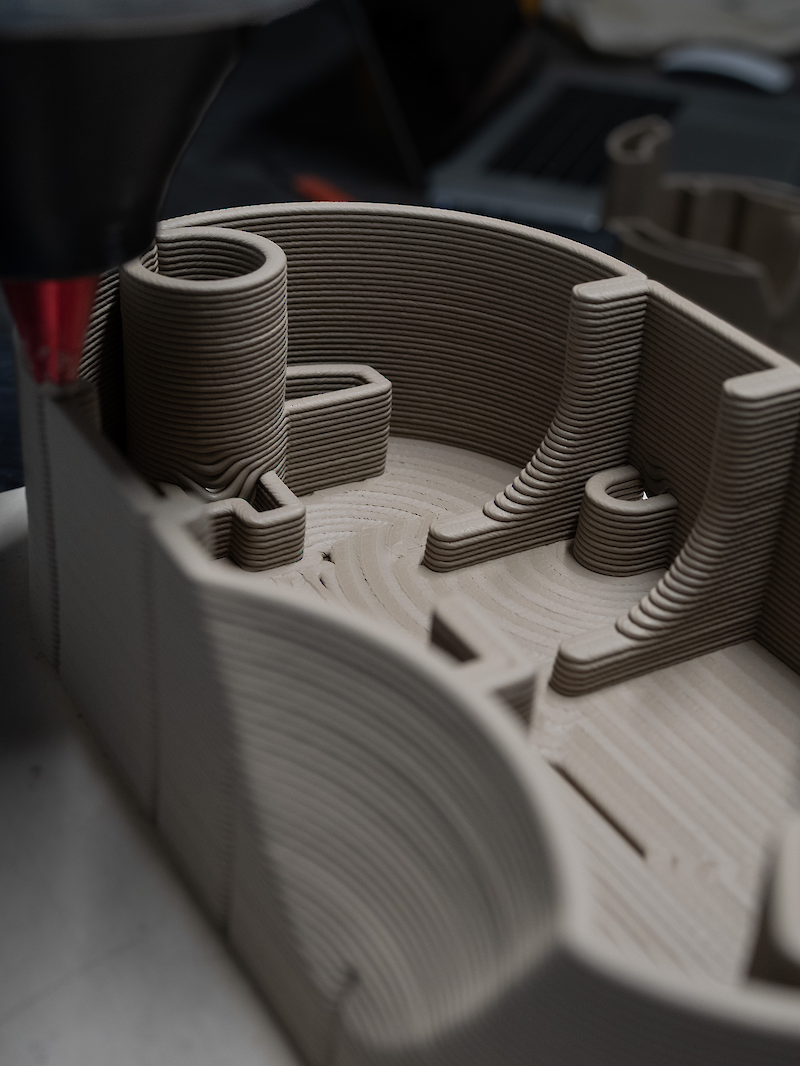
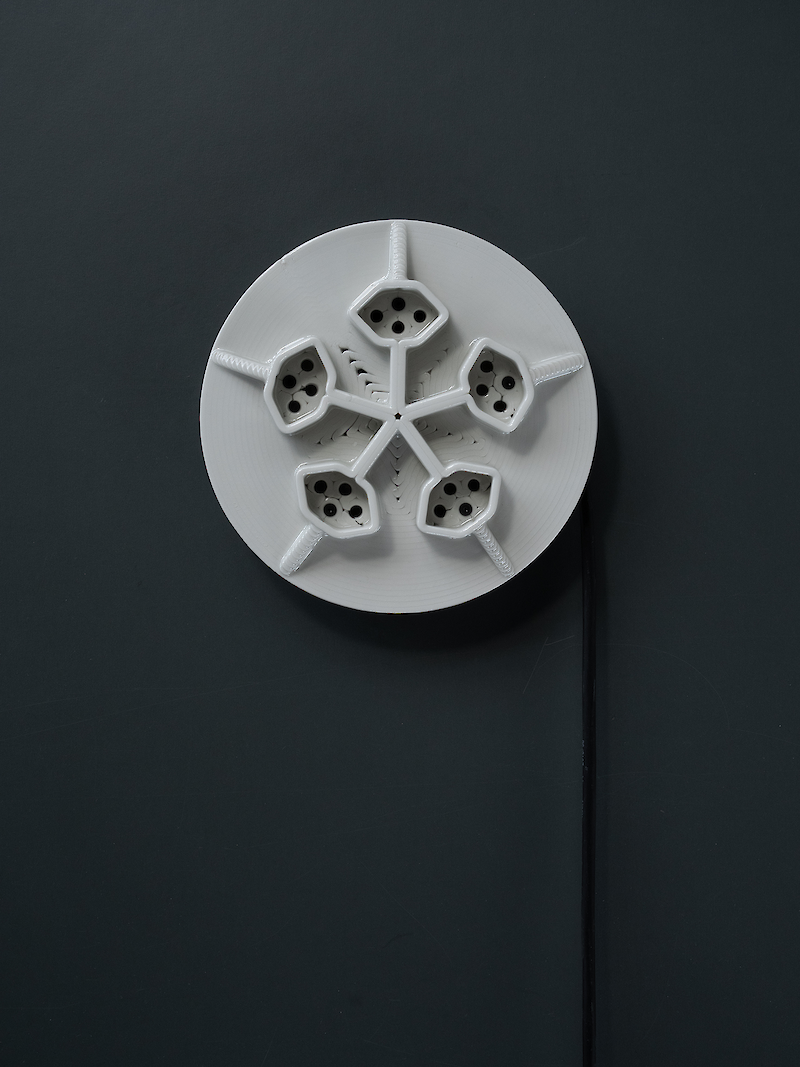
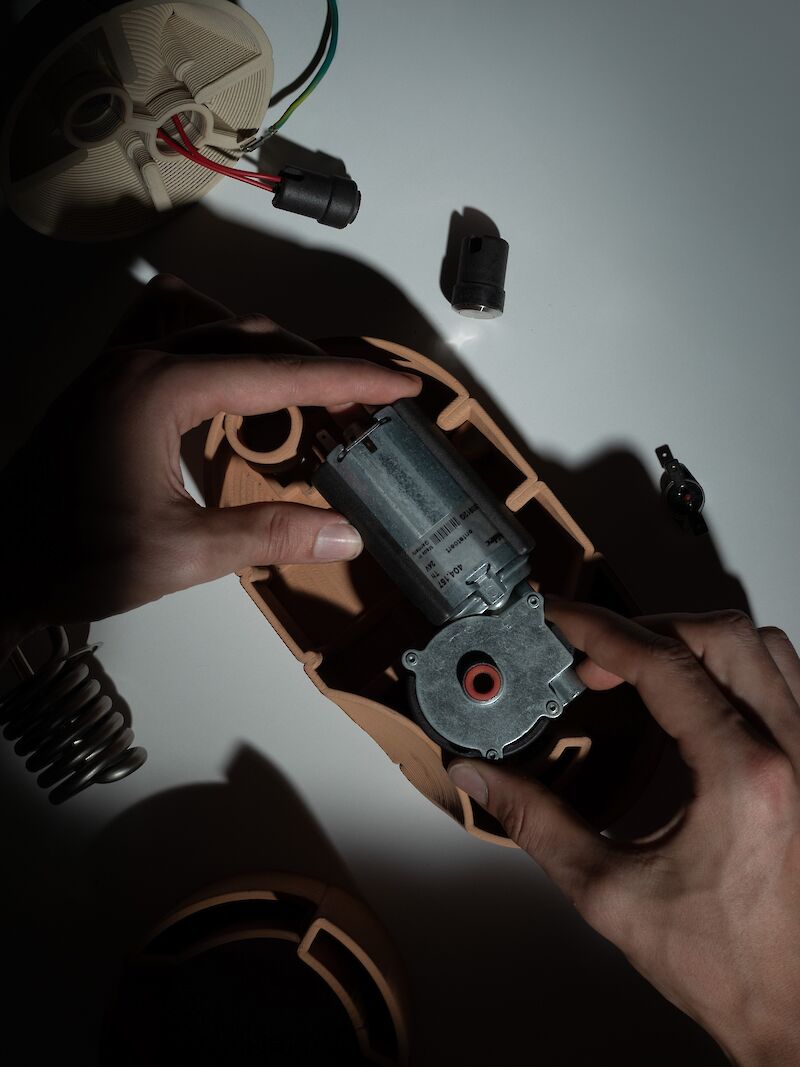
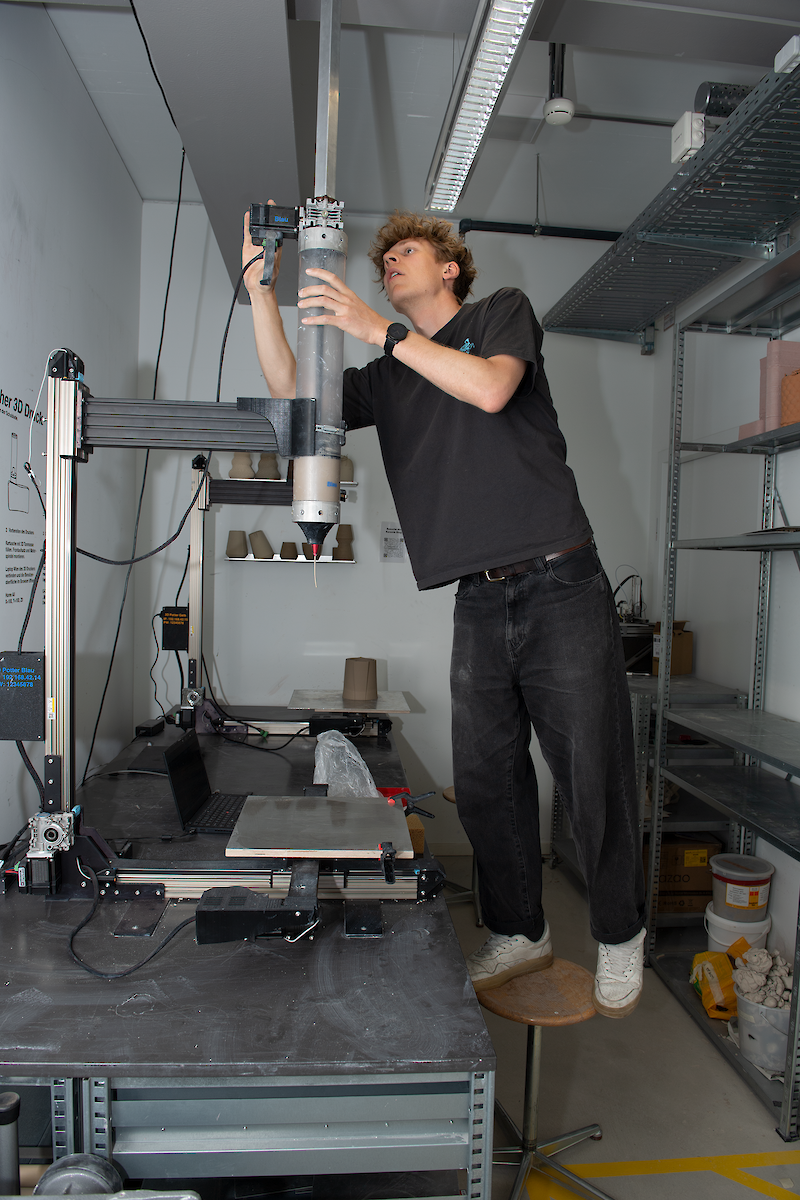
We need new narratives of production. Open and in situ. This exploration of electric appliances understands openness not as do-it-yourself, but as a network of independent producers: Could local ceramic studios manufacture electric appliances? Through clay 3D printing, standard components and reclaimed electronic waste, the cable-button-thermoswitch-resistor-machine becomes an electric kettle. A multi-socket. A coffee grinder.
Compared to the established logic of serial production, this alternative process opens up new principles of construction, altering how machines appear and how we interact with them. Globally circulating standard components are imagined with soft interfaces to fit into the ceramic structures. Meanwhile, the structure’s design can be shared to be reproduced and modified locally.
«In Situ Machines» proposes an open vision of how apparatuses can be conceived when locality, reuse and repair are treated as inherent parts of production.
Micha Baggenstos
MA-Diploma 2026 / Industrial Design
Mentoring
Lukas Franciszkiewicz
Robin Hoske
Felix RasehornPortrait image credit:
Guillaume Musset, ZHdK.