Terrabacteria
A Design for Post-Industrial Landscapes
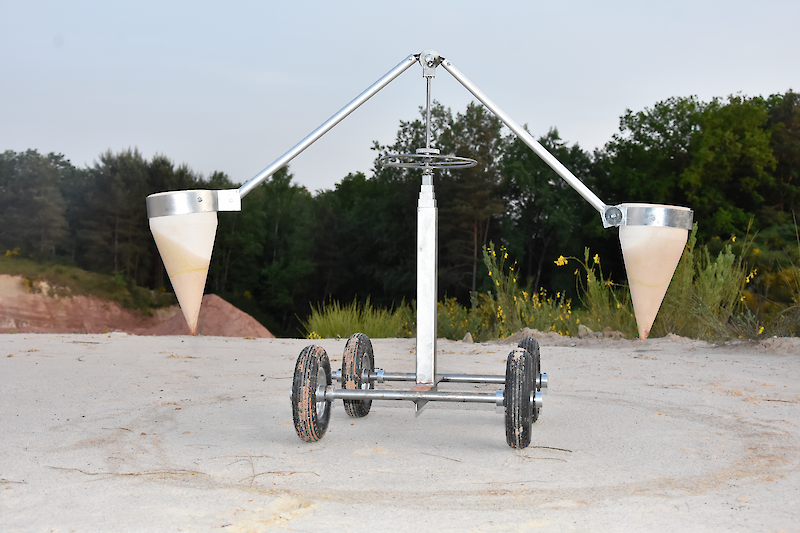
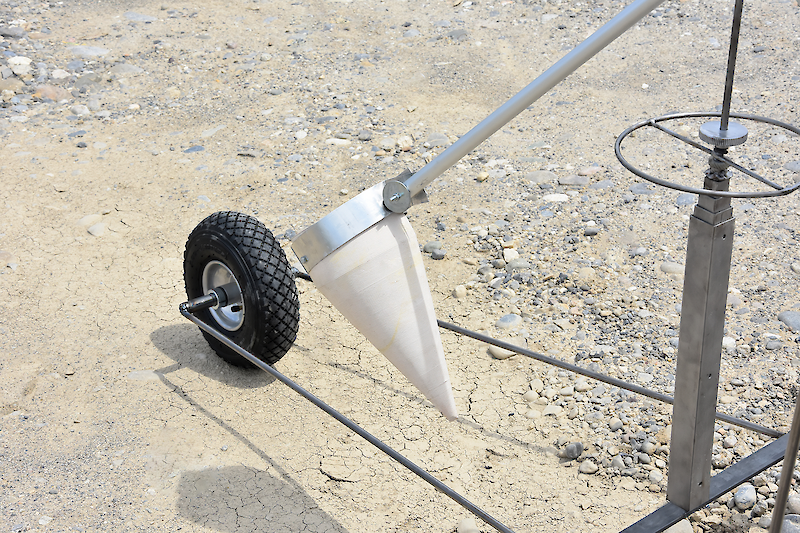
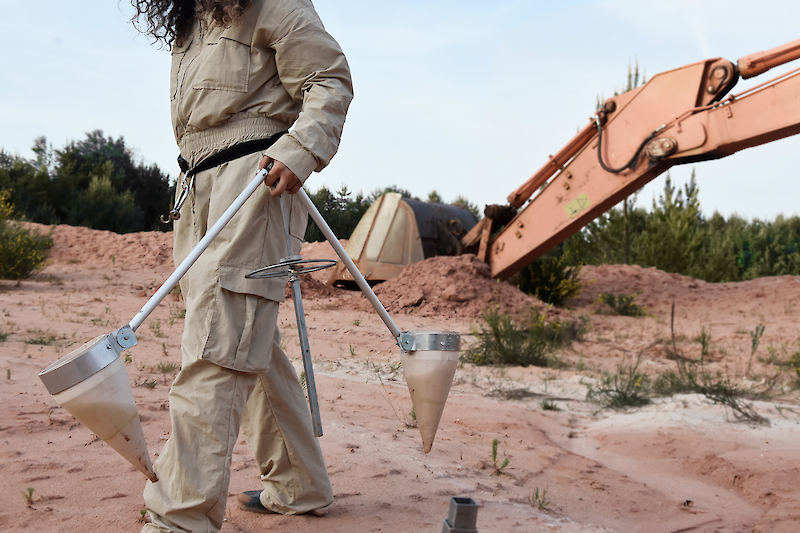
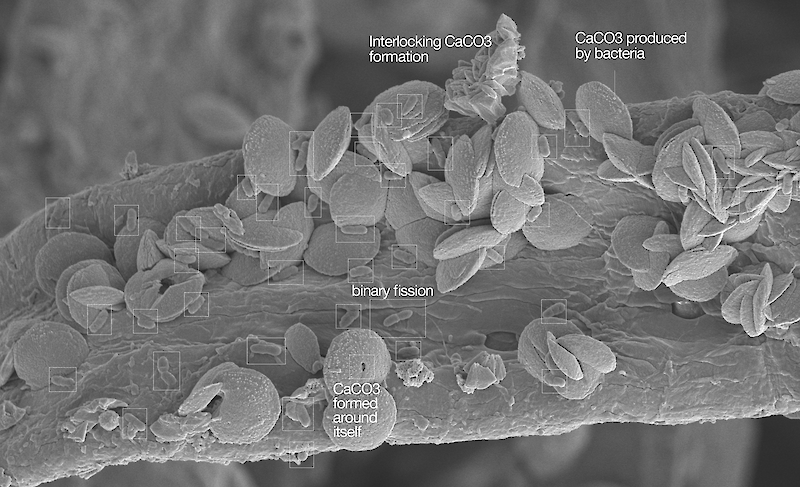
What remains after industrial raw material extraction? Post-industrial landscapes are often associated with devastation and loss. «Terrabacteria» is a design inquiry that sees these sites not as passive, but as active, cared-for, and transformative. Through site-responsive sensing, «Terrabacteria» enables biomineral processes to unfold, combining a height-adjustable rotating system, 3D-printed ceramic vessels and a liquid culture of S. pasteurii, a soil bacterium that precipitates calcium carbonate.
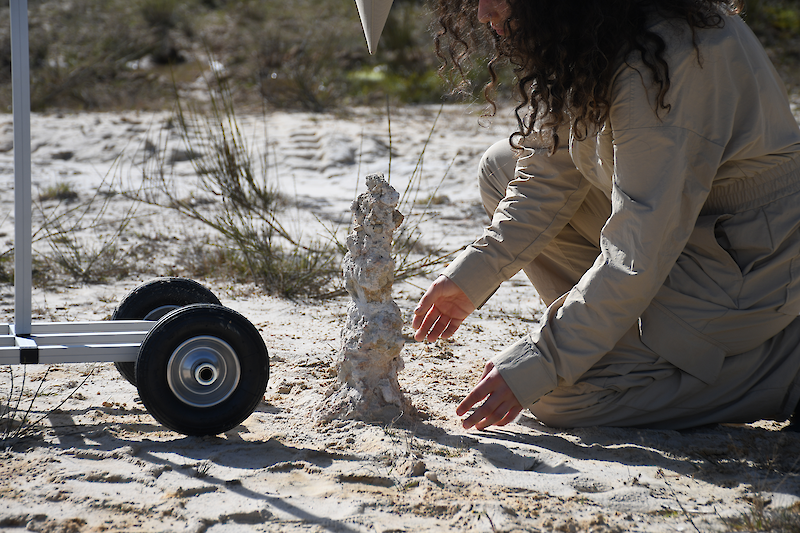
Alongside the design is a living, calcifying structure that continues to grow throughout the exhibition. Composed of post-industrial ground, Sporosarcina pasteurii bacteria, and a nutrient solution that is still in all of which interact constantly. The rotational system guides the movement that slowly drips bacteria, generating a biomineralized formation. Presented within the exhibition is a cross-section of a calcifying structure from its continuous rotation and accumulation. Remaining metabolically active throughout the exhibition, it shows matter not as static or fixed, but as dynamic, relational, and emerging.
Working with local ecologies and material emergence across scales, it sits within the tension of extractive realities and microbial materialities.
Terrabacteria by Anliak Karya
Karya Anliak
MA-Diploma 2026 / Industrial Design
Mentoring
Lukas Franciszkiewicz
Rasa WeberPortrait image credit:
Guillaume Musset, ZHdK.