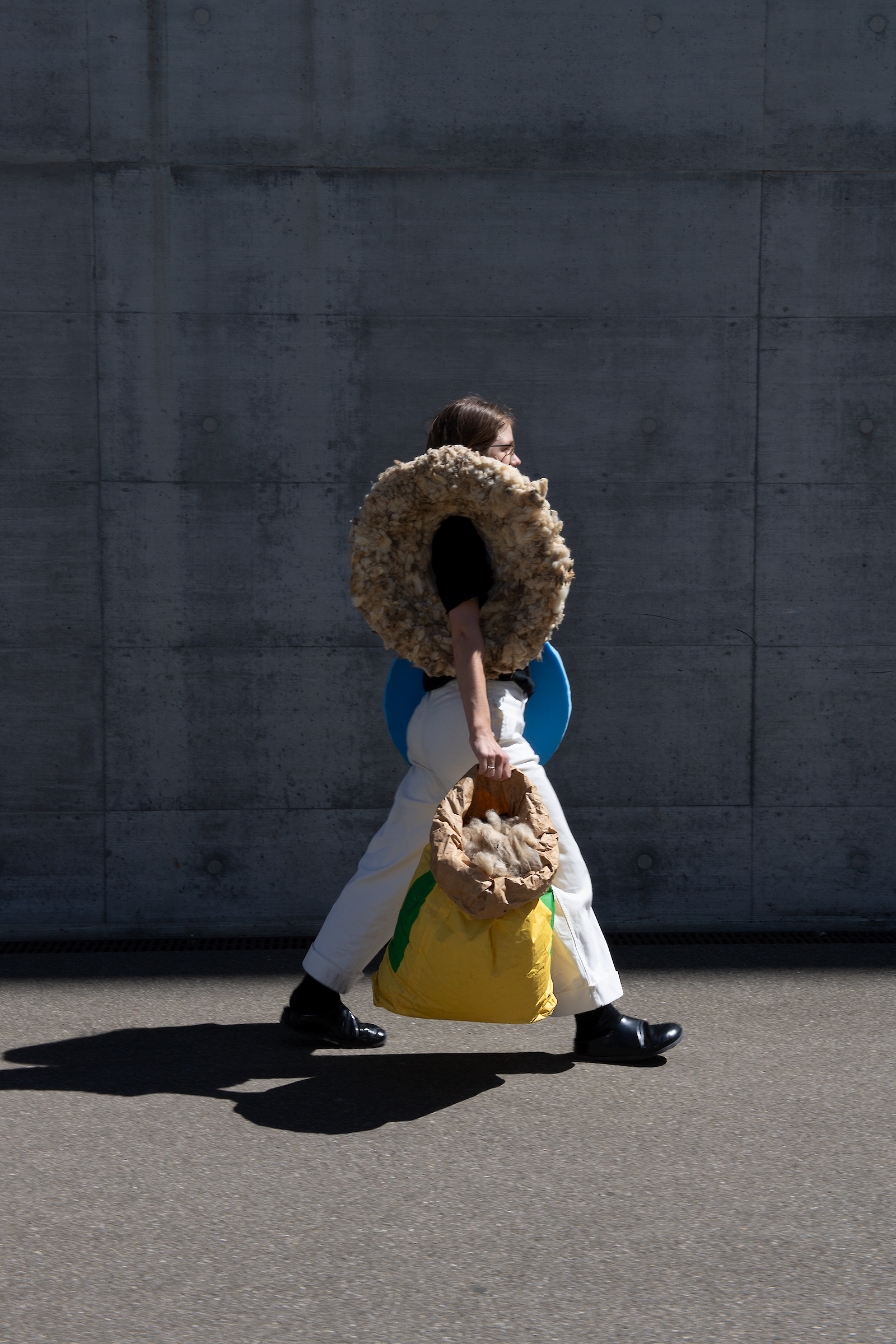
Tooling to Regenerate
A Design for Regional Material Resilience in a Flock
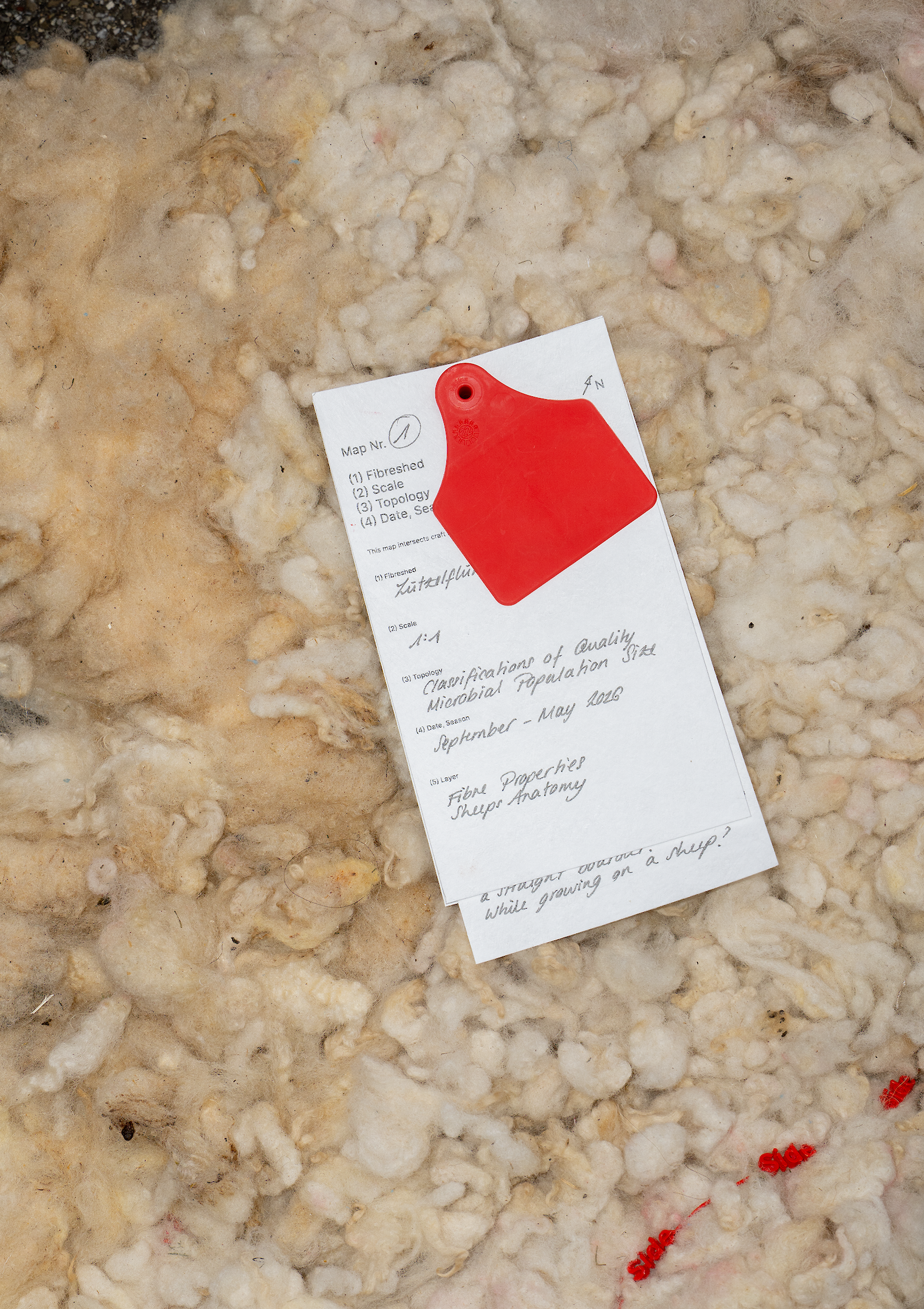
This project explores the intersection of craft and industry, reality and fiction, application and exploration, by focusing on the scaleability of regional regeneration through tool-making. The tools to loosen fibres and felt volumes respond to local material variances and the multispecies realities of wool, operating at the mid-scale of alpine flock sizes. To reconfigure the representation of wool as a uniform resource, I remap a sheep’s fleece in a new way. The layers provide a contrast to the industrial categorisation of material value and the absurdity of standardising nature, proposing a shift in the perception of materials, from isolated resources to entangled matter.
In practice, I prototyped a series of tools: a washing net, a picker to loosen the fibres, a needle felting unit and a woollen map. The needle felting tool is clamped to a drill. The drill's rotation drives a unit of felting needles that move up and down, into and out of the wool. This approach interlocks the quality of the wool fibre, microbes and nutrients wit h the sheep, landscapes, people, and regions. With these tools, volumes can be created and replicated through partly automated and partly situated movements, while the varying fibre properties determine the shape and behaviour of the map being felted.


Caja Peters
MA-Diploma 2026 / Industrial Design
Mentoring
Lukas Franciszkiewicz
Rasa WeberPortrait image credit:
Guillaume Musset, ZHdK.