Urban Energy Commons
Madeleine L. Hykes
Urban Energy Commons

Building Sufficient Futures Across Theory and Practice

What happens when you flip on a light switch? Inequitable systems, energy grids – power flows with little resistance. Frictionless – everything out of sight, out of mind. Sleek visions of urban energy futures flash forward without connecting top-down systemic change to material implication. Gaps amid discourses, gaps in design, delayed desired realities. That is the context of my design inquiry into sufficiency policy, bridging human geography and industrial design. I propose the concept of an urban energy commons alongside boundary objects made-in-process: video, printed matter and a waterclock. Because the switch? More complex than you think.

Urban Energy Commons by Madeleine L. Hykes
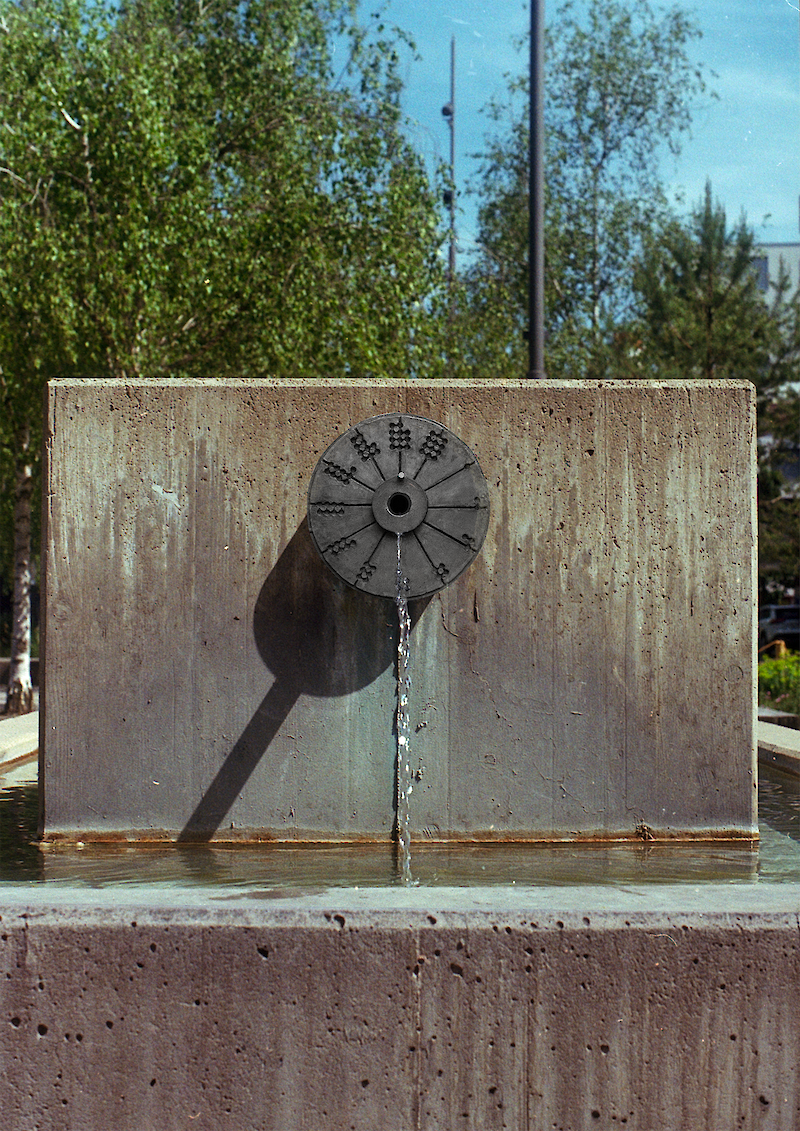
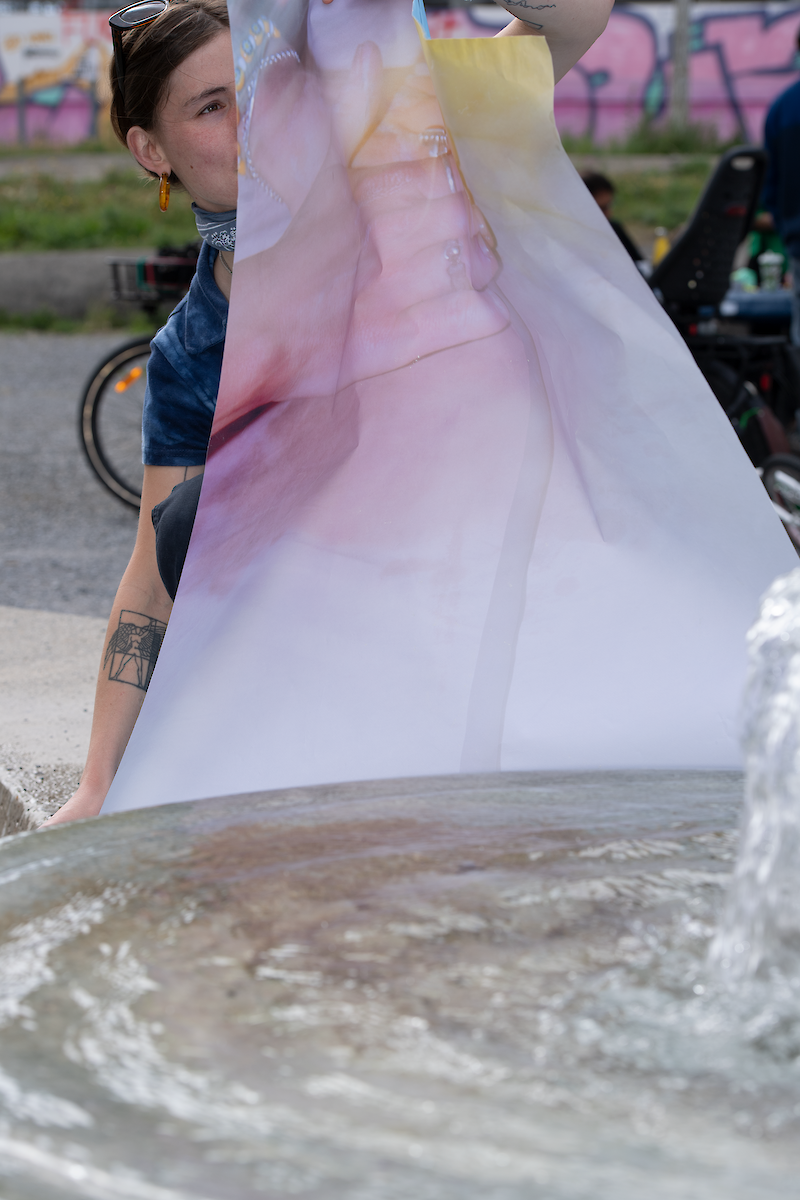
My vision of an urban energy commons includes a transformed relationship to the passage of time. If energy management serves as a core connector of a commons, then perhaps the day-to-day is structured around this element. Could the pas- sage of time be perceived and measured in relation to the levels of energy consumption? Here, a waterclock that integrates into existing public fountains in the city to explore this reality. Image Credit: Jonathan Youd and Madeleine L. Hykes.
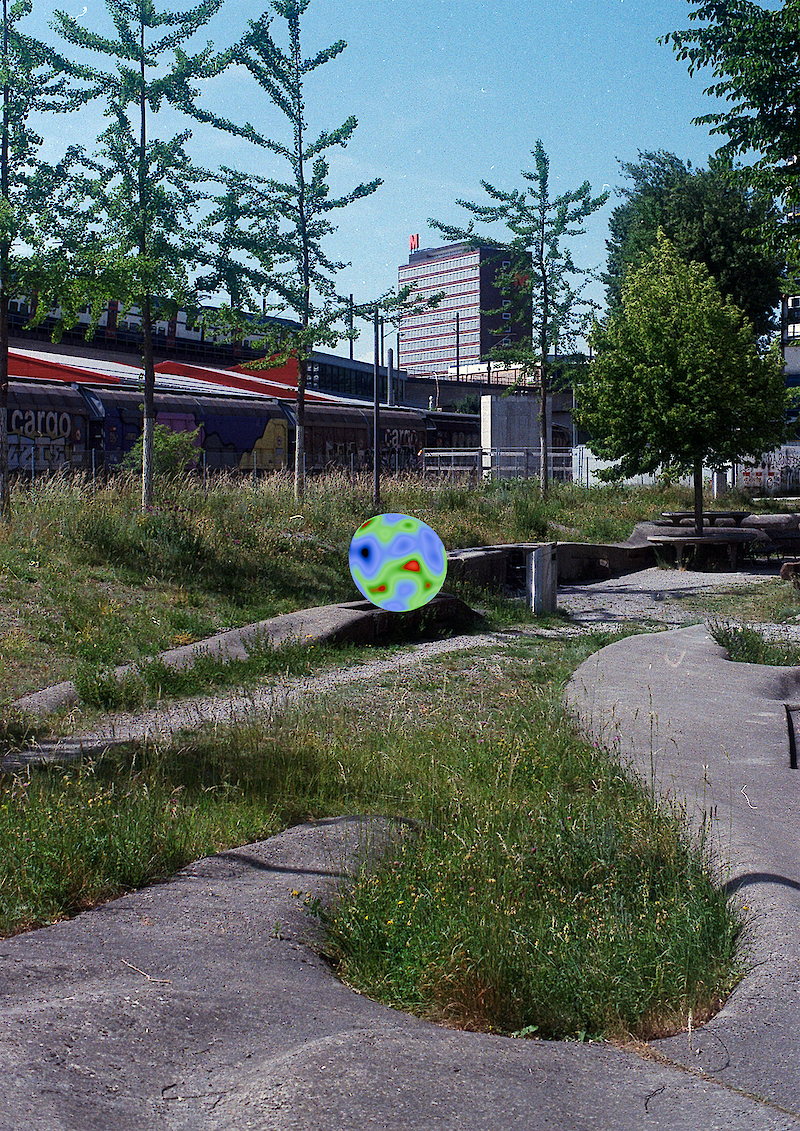
Semi-public (or third places) sites, such as Pfingstweid Park, are vital for connection to each other and the non-human. Here, the interweaving of nature, public fountains, community gardens, open space, residential tenor, and urbanity make it an ideal site for considering how an urban energy commons might synthesize. Image Credit: Jonathan Youd and Madeleine L. Hykes.
An urban energy commons necessitates bridging indi- vidual and collectie energy consumption. Here, a record sleeve for a vinyl housing sounds of electricity usage, on one side the human actors, on the other is the non-human actors. Audio composed from my code that converts unit-level consumption data into audible tones. Created through this are tracks of single tones that can be overlayed to potentially create actual songs. Image Credit: Massimo Bordogna
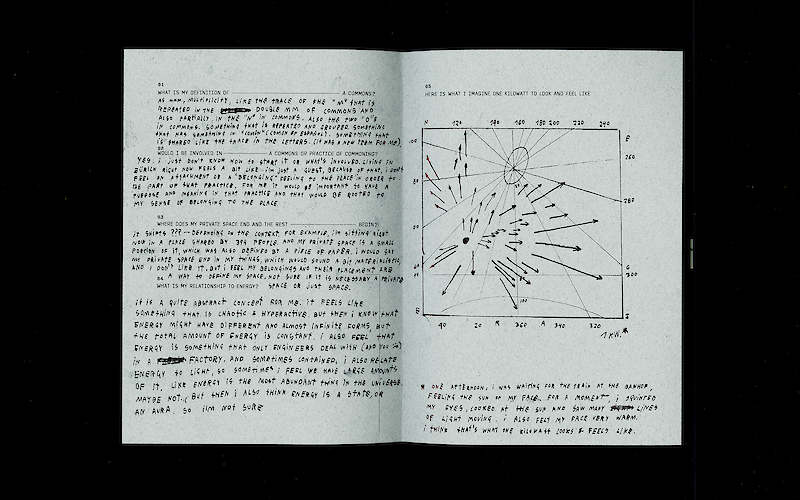
Speculation only goes so far. All the infrasutrcutre and policy in the world could change but without social and cultural shifts, long-term and durable systemic change is improbable. Understanding what might shift requires understanding people, their perspectives, their realities. Here is one of several qualitative responses I received following an exhibition in December 2025.