Speculative Practices: Anything, but the Future
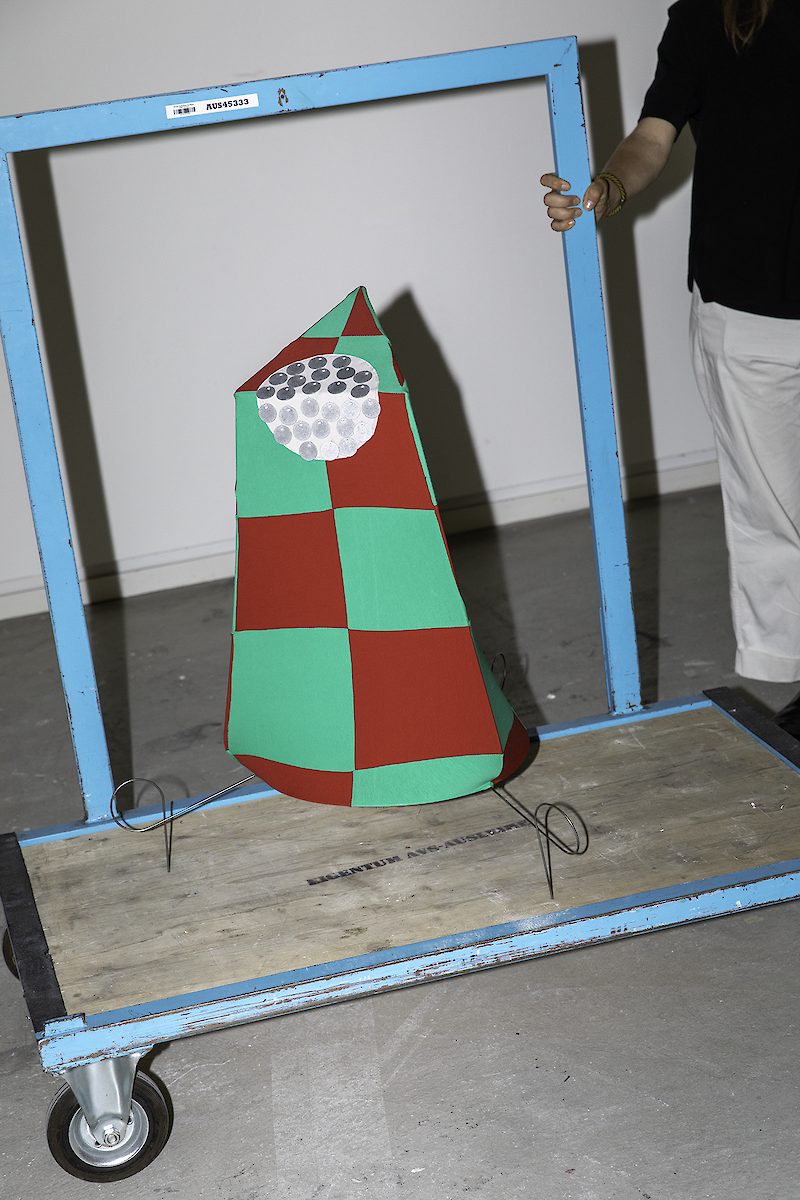
The Speculative Practices module focuses on speculative thinking, physical making and designed objects. The project fundamentally interrogates how speculation can be advanced through matter rather than through representation and explores how made things—objects, prototypes, working models—can function as arguments.
FS2026 Brief: Anything, but the Future – Designing for a World of Many Worlds
"How we see the world matters — but knowing how the world sees us also matters."
— Ray Nayler, The Mountain in the Sea, Farrar, Straus and Giroux, 2022
Jakob von Uexküll's umwelt describes the unique world each creature experiences through its senses — a tick's world is not a dog's world, and neither is ours. This workshop turns the figure of the umwelt around. Rather than trying to see as a bat, a plant, a machine, students attempt to imagine being seen by them, and to design objects that register inside those other-than-human worlds.
The work is iterative and material. Students select a nonhuman umwelt — animal, plant, fungus, machine, system — and pair it with an existing human object, body, or environment. Through hands-on experimentation, physical modelling, and rapid prototyping, they visualise and materialise that object as it might exist inside the chosen umwelt. The goal is not to fully comprehend nonhuman experience but to celebrate its irreducibility and let it teach us how to design differently.
Make early. Let ideas emerge, fail, and evolve in the material process.
Tutors
Anthony Dunne
Fiona Raby
Lukas Franciszkiewicz
Reading
- Designing when “spacetime is doomed,” by Dunne & Raby
- A Foray into the Worlds of Animals of Humans, by Jakob Von Uexküll
- Alien Phenomenology, by Ian Bogost